
HomeHigh-End Jewelry Photo Retouch...
High-End Jewelry Photo Retouching
Editorial, Lookbook &
Campaign Retouching
Season-wide colour consistency for lookbooks and campaigns, retouched to a single approved reference so a 160-image set reads as one shoot under one light. Inputs: RAW, JPEG, TIFF, PSD. Outputs: layered PSD, 300 DPI TIFF, sRGB JPEG. Built for brand campaigns, editorial features, and seasonal catalogues shot across multiple days.
One Approved Colour Reference That Holds Every Frame of a Campaign in Exact Agreement
Lookbooks fail on colour drift between shoot days — yellow gold reads warm on Monday and cold by Thursday, and the finished campaign looks assembled from three different brands.
We retouch three to five anchor images first, approve them, then match every remaining frame to that standard in Capture One’s six-zone editor. One decision, applied consistently across the entire set.
Consistency is decided once, then held across the entire set.
The work in sequence:
- Approve three to five reference anchors before the full set
- Match every frame in Capture One's six-zone colour editor
- Isolate yellow-gold drift from white-gold tones per frame
- Retouch surfaces to the anchor, preserving metal character
- Deliver layered PSD, 300 DPI TIFF, and sRGB JPEG together
Made for :
brand campaigns, editorial shoots, seasonal lookbooks, and creative directors managing multi-day catalogue production.
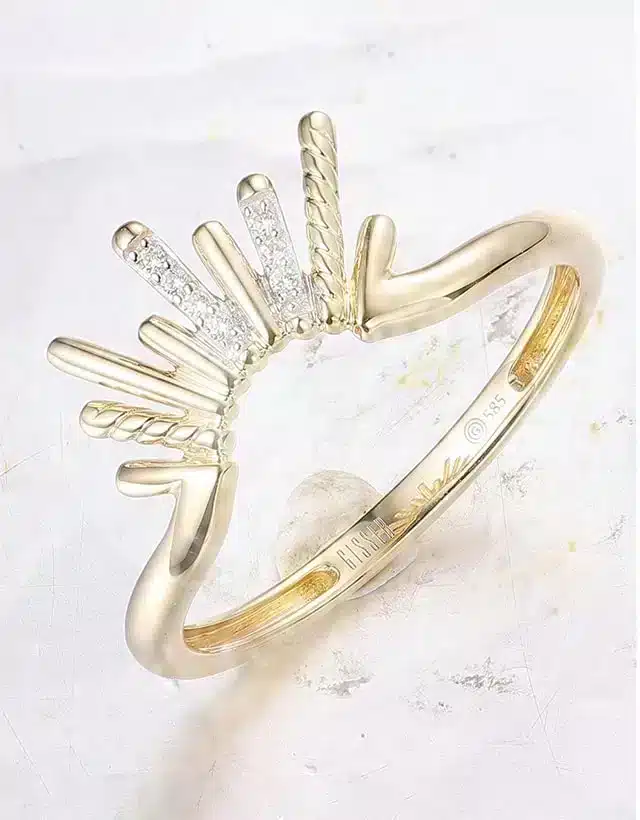
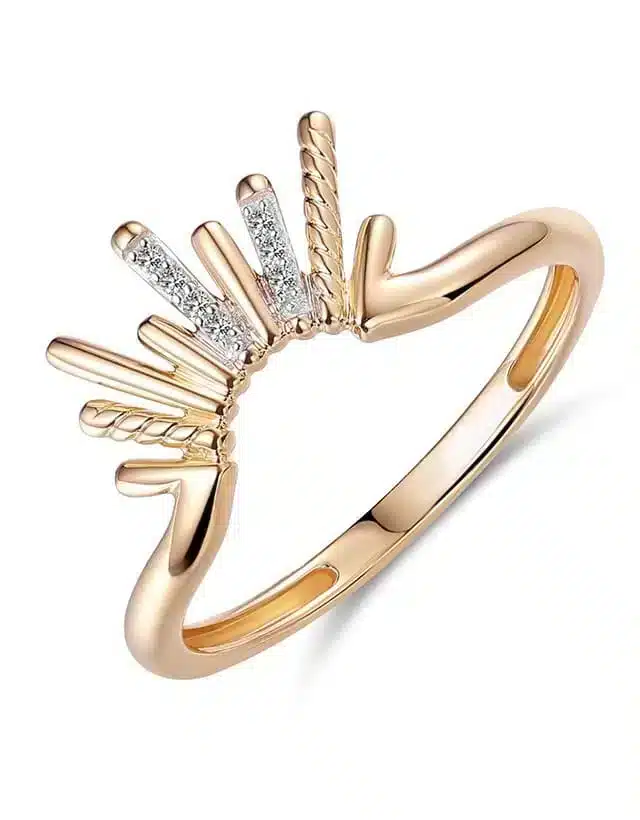
Jewelry Surface Polish &
Texture Enhancement
Jewelry surface polish that lifts scratches, fingerprints, and casting seams while preserving the directional metal grain, using frequency separation rather than a flattening Healing-Brush pass. Inputs: RAW, TIFF, PSD. Outputs: layered PSD, 300 DPI TIFF. Built for hero shots, macro close-ups, and catalogue imagery where the surface finish carries the piece and cheap smoothing shows.
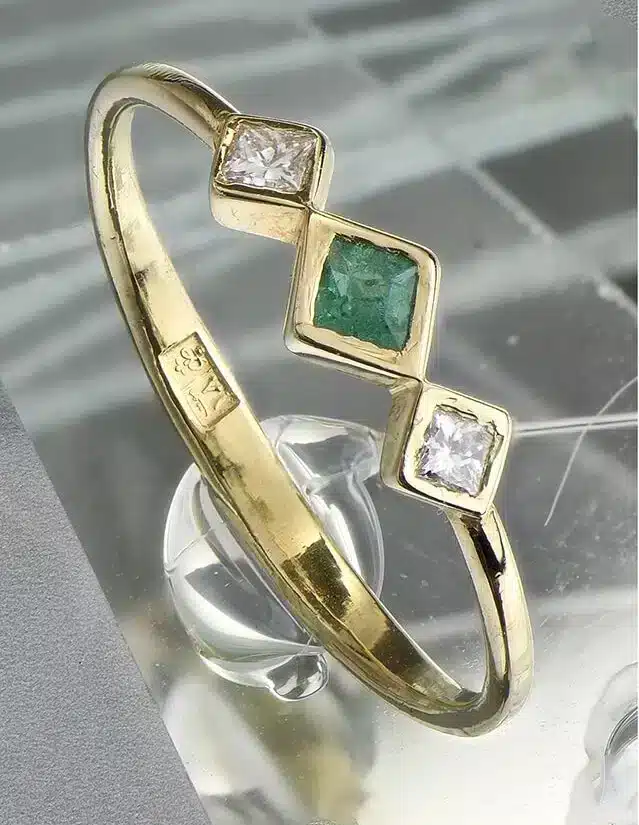
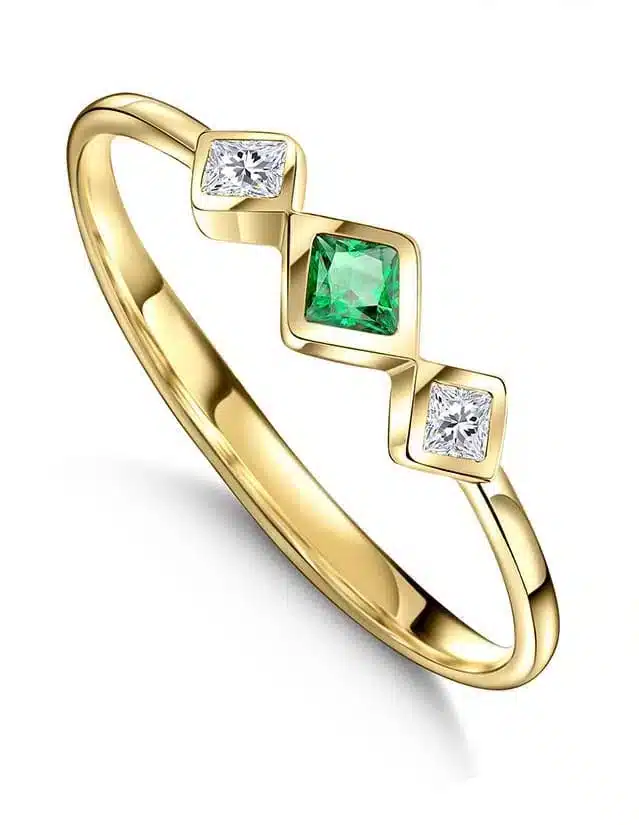
Frequency-Separated Surface Polish That Removes Flaws While Keeping the Metal's Directional Grain Intact
Run the Healing Brush across brushed platinum and it averages the grain into a flat, plastic-toy patch — the single clearest tell of cheap retouching, visible at a glance to any art director.
We split the file into tone and texture, healing scratches on the low-frequency layer only while the directional grain stays untouched above it. The flaw goes; the finish stays.
The flaw and the finish live on different layers — so we treat them separately.
Inside the technique:
- Separate each file into low-frequency tone and high-frequency texture
- Heal scratches and seams on the tone layer only
- Preserve directional grain on the untouched texture layer
- Clone gemstone facet edges at 100% hardness, sub-1px radius
- Return a layered PSD with every correction non-destructive
Ideal for :
hero product shots, macro close-ups, and brands whose pieces are defined by brushed, hammered, or satin metal finishes.
Macro Jewelry Retouching &
Focus Stacking
Front-to-back sharpness for macro jewelry, composited from bracketed exposures so prong tips, girdle, and table facets all hold focus together in one frame. Inputs: bracketed RAW sequences. Outputs: layered PSD, 300 DPI TIFF. Built for engagement rings, fine-detail features, and any piece shot at true macro scale where one plane is never enough.
Focus-Stacked Sharpness That Holds Every Plane From Prong Tip to Table Facet
At macro scale, depth of field is roughly 0.8mm — far too shallow to hold a ring’s prong tips and its table facet sharp together in any single exposure, however carefully shot.
We composite eight to fifteen bracketed frames with Zerene Stacker, DMap for metal and PMax for facet edges, then correct ghosting and haloing by hand at every depth-discontinuity zone.
One frame cannot hold the depth, so we build sharpness from many.
How the composite is built:
- Composite eight to fifteen bracketed exposures per piece
- Apply DMap for metal surfaces, PMax for facet edges
- Correct ghosting and haloing by hand at depth transitions
- Recover highlight and shadow lost to dynamic range compression
- Deliver a sharp 300 DPI master with all planes resolved
Suited to :
engagement rings, macro detail photography, and pieces whose value lives in fine, close-range structure.
Image Optimization for
Print & Web
One master file, mastered a single time and exported to every destination your team publishes — print, web, and each retailer’s exact specification. Inputs: approved retouched PSD. Outputs: 300 DPI TIFF, sRGB JPEG, platform variants. Built for brands publishing across print, e-commerce, and luxury marketplaces who need one approval to serve every channel.
One Adobe RGB Master Exported to Print, Web, and Every Retailer Exactly In Spec
Approve a file on screen, then watch it shift heavier in print and drift again on each marketplace — because it was never mastered to a single controlled gamut in the first place.
We master once as a 300 DPI Adobe RGB PSD, then export ICC-managed variants for print, web, and every platform, holding gold hue within two degrees of the approved master across each file.
The colour you approve is the colour every channel receives.
What mastering covers:
- Master once as a 300 DPI Adobe RGB layered PSD.
- Export 300 DPI TIFF for print and sRGB JPEG for web
- Match Net-a-Porter, Farfetch, and SSENSE specifications exactly
- Convert via ICC profiles with Perceptual rendering intent
- Hold gold hue within two degrees across every export
Built around :
brands publishing to print, e-commerce, and luxury marketplaces who need one approval to serve every channel.
E-commerce Catalog &
Batch Retouching
Catalogue-scale retouching that holds one standard across thousands of SKUs, pairing per-image surface work with anchor-matched colour so the whole set stays uniform across every listing. Inputs: RAW, JPEG, TIFF, PSD. Outputs: platform-ready JPEG, PSD, TIFF. Built for high-volume catalogues, marketplace sellers, and multi-photographer production runs shot over many days.
A Single Colour Standard Held From the First Catalogue SKU to the Five-Thousandth
A 340-SKU catalogue shot across four days and two photographers drifts in colour, and customers notice when SKU 85 reads warm champagne while SKU 86 reads cold lemon on the same page.
We segment by session, approve colour anchors per segment, then match every image to them — hand-retouching each surface individually while only the colour-matching step is systematised.
Scale is where consistency usually breaks — so that is where we engineer it.
IThe batch method:
- Segment the catalogue by shoot session and photographer
- Approve one to three colour anchors per segment
- Match every SKU to its anchor in Capture One
- Retouch each image's surface individually by hand
- Archive approved anchors for next season's continuity
Relied on by :
high-volume catalogues, marketplace sellers, and e-commerce teams standardising thousands of SKUs across seasons.
Have Questions?
We’ve Got Answers
Find answers to common questions about our jewelry retouching, product photo editing services, turnaround time, pricing, file transfer methods, and free trial process.
Frequency separation splits a photograph into a high-frequency texture layer and a low-frequency tone layer. Surface flaws on jewelry are tonal, so we heal them on the tone layer alone, leaving directional metal grain untouched. This preserves the character of brushed platinum or hammered gold that a direct Healing-Brush pass would flatten.
At macro magnification, depth of field can be as shallow as 0.8mm, while a ring spans five to six millimetres from prong tip to table. No single exposure holds it all sharp. Focus-stack compositing merges eight to fifteen bracketed frames into one image, with manual correction where automated blending produces ghosting or halos.
Luxury retailers typically require 2,000 pixels on the longest edge, sRGB colour, and a pure white background at RGB 255,255,255, delivered as JPEG. We master every project as a 300 DPI Adobe RGB PSD, then export retailer-specific variants using ICC-managed Perceptual conversion that holds colour within two degrees of hue.
Send us one piece — RAW, JPEG, TIFF, or PSD — and receive it fully retouched, surface-polished, and mastered to your target platform within 24 hours. No card, no commitment, no obligation to continue. Begin with the free trial, or share your catalogue volume for a same-day quote.
Our services include background removal, shadow creation, diamond and gemstone enhancement, metal polishing, reflection cleanup, color correction, and high-end finishing. We ensure every image looks flawless, realistic, and ready for eCommerce or marketing use.
Yes, we maintain strict confidentiality and data security. All jewelry images and project files are handled securely, and we never share or reuse your images without permission. Your brand’s privacy and trust are our top priority.
Absolutely. We specialize in bulk jewelry retouching for eCommerce stores, brands, and photographers. Our workflow is optimized for handling large volumes while maintaining consistent quality and fast turnaround times.
We accept common formats such as RAW, JPEG, PNG, PSD, and TIFF. Final edited images can be delivered in high-resolution formats suitable for websites, catalogs, advertising campaigns, and print use.
We accept secure international payment methods including PayPal, Stripe, bank transfer, Wise, and major credit cards such as Visa, MasterCard, and American Express. Our flexible payment options make it easy for global jewelry brands, photographers, and eCommerce businesses to pay conveniently.
Yes, all payments are processed through trusted and secure payment gateways with advanced encryption. We ensure complete payment security, transparency, and no hidden charges, providing a safe and hassle-free experience for all our clients worldwide.